Read page 1 as text
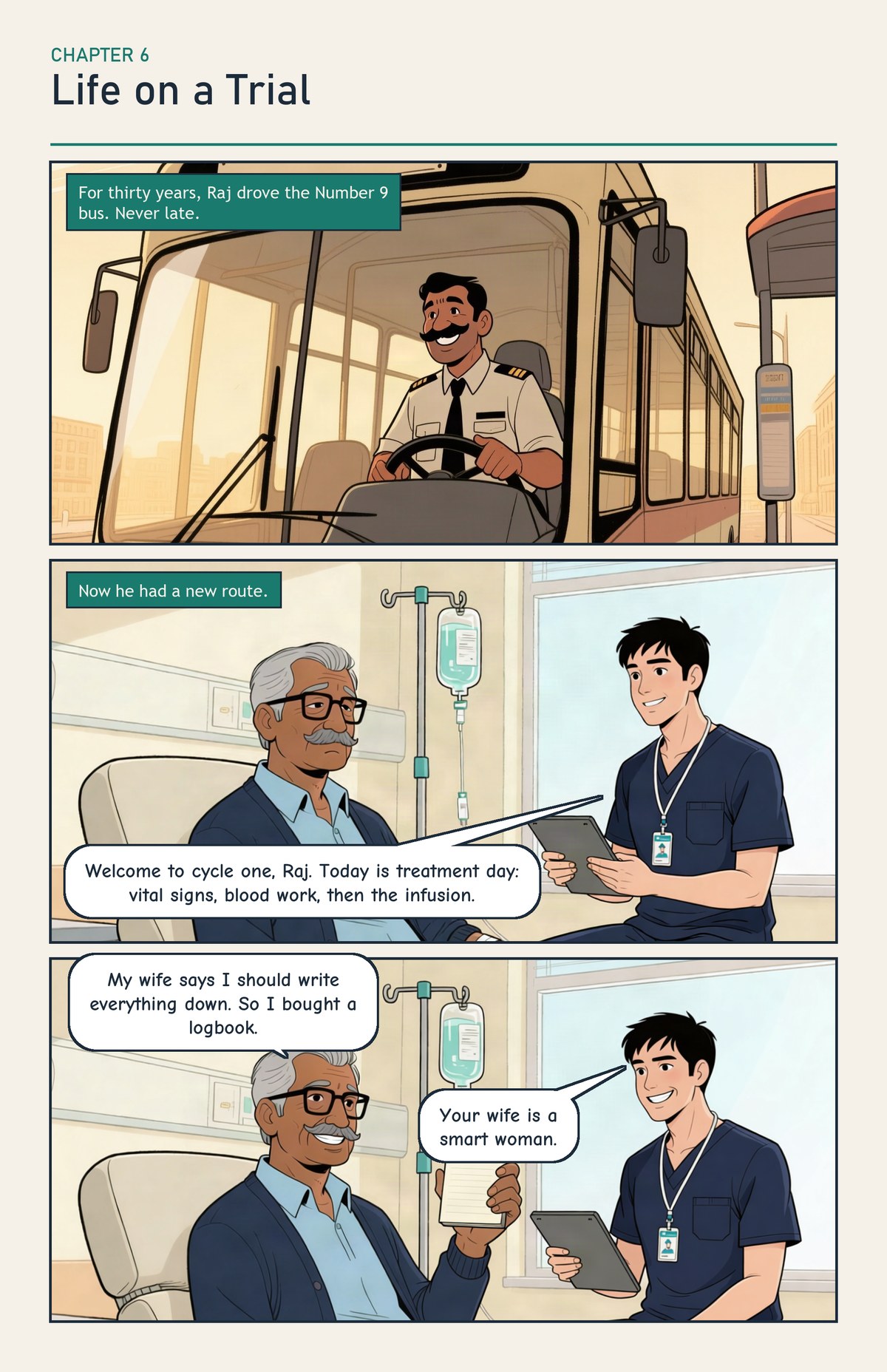
For thirty years, Raj drove the Number 9 bus. Never late.
Now he had a new route.
Sam: Welcome to cycle one, Raj. Today is treatment day: vital signs, blood work, then the infusion.
Raj: My wife says I should write everything down. So I bought a logbook.
Sam: Your wife is a smart woman.
Read page 2 as text
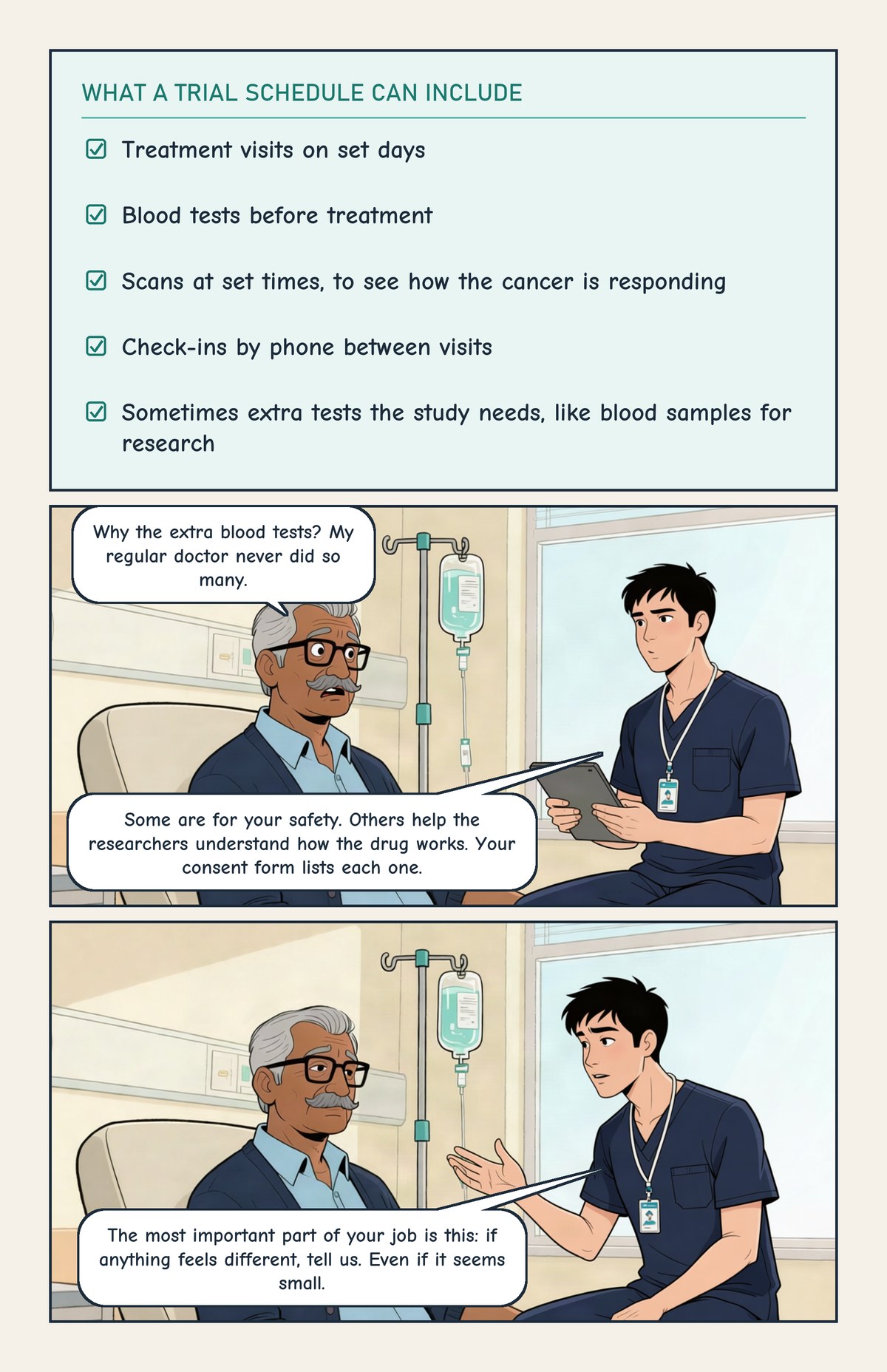
What a trial schedule can include
- Treatment visits on set days
- Blood tests before treatment
- Scans at set times, to see how the cancer is responding
- Check-ins by phone between visits
- Sometimes extra tests the study needs, like blood samples for research
Raj: Why the extra blood tests? My regular doctor never did so many.
Sam: Some are for your safety. Others help the researchers understand how the drug works. Your consent form lists each one.
Sam: The most important part of your job is this: if anything feels different, tell us. Even if it seems small.
Read page 3 as text
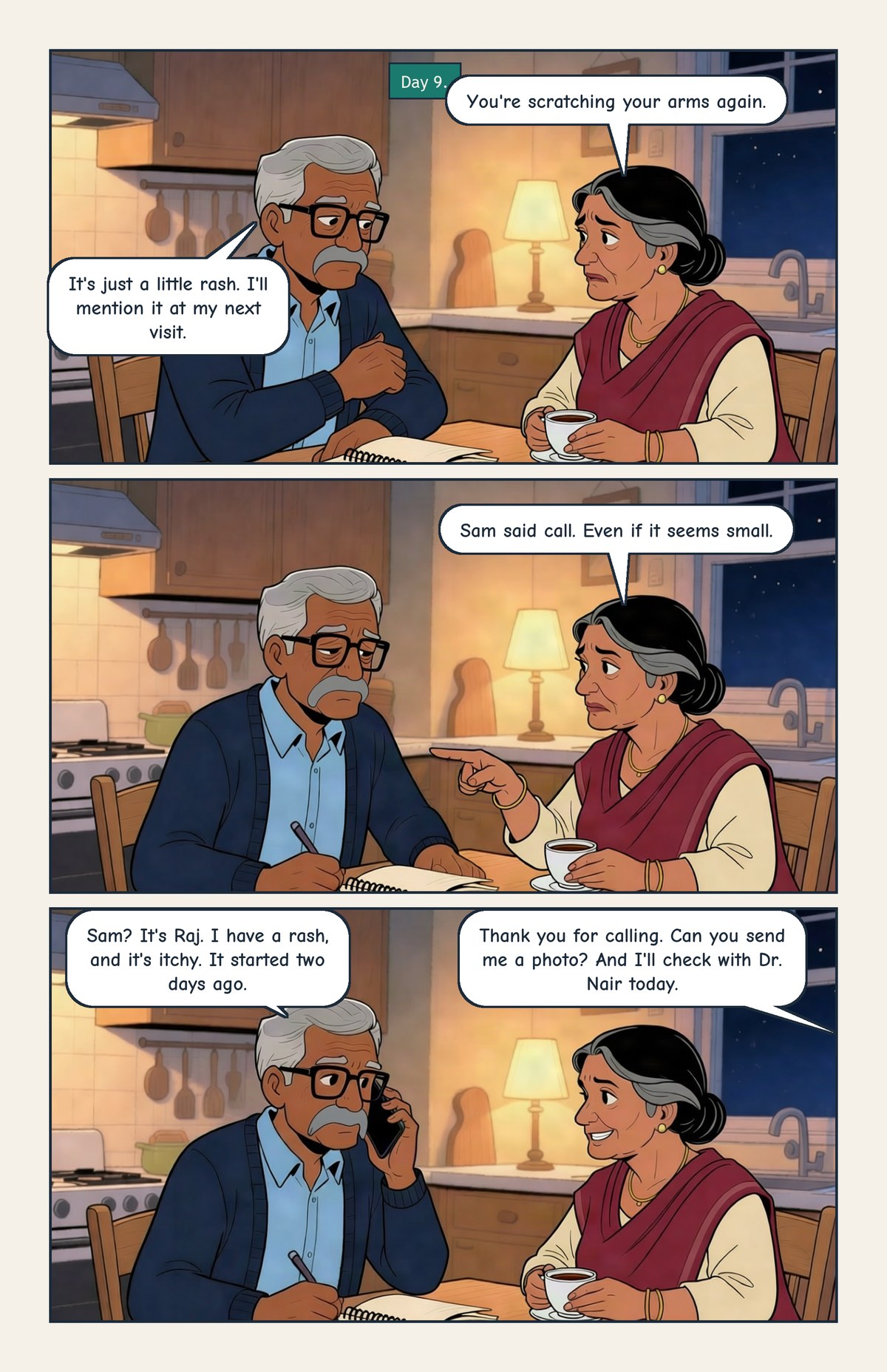
Day 9.
Priya: You're scratching your arms again.
Raj: It's just a little rash. I'll mention it at my next visit.
Priya: Sam said call. Even if it seems small.
Raj: Sam? It's Raj. I have a rash, and it's itchy. It started two days ago.
Sam: Thank you for calling. Can you send me a photo? And I'll check with Dr. Nair today.
Read page 4 as text
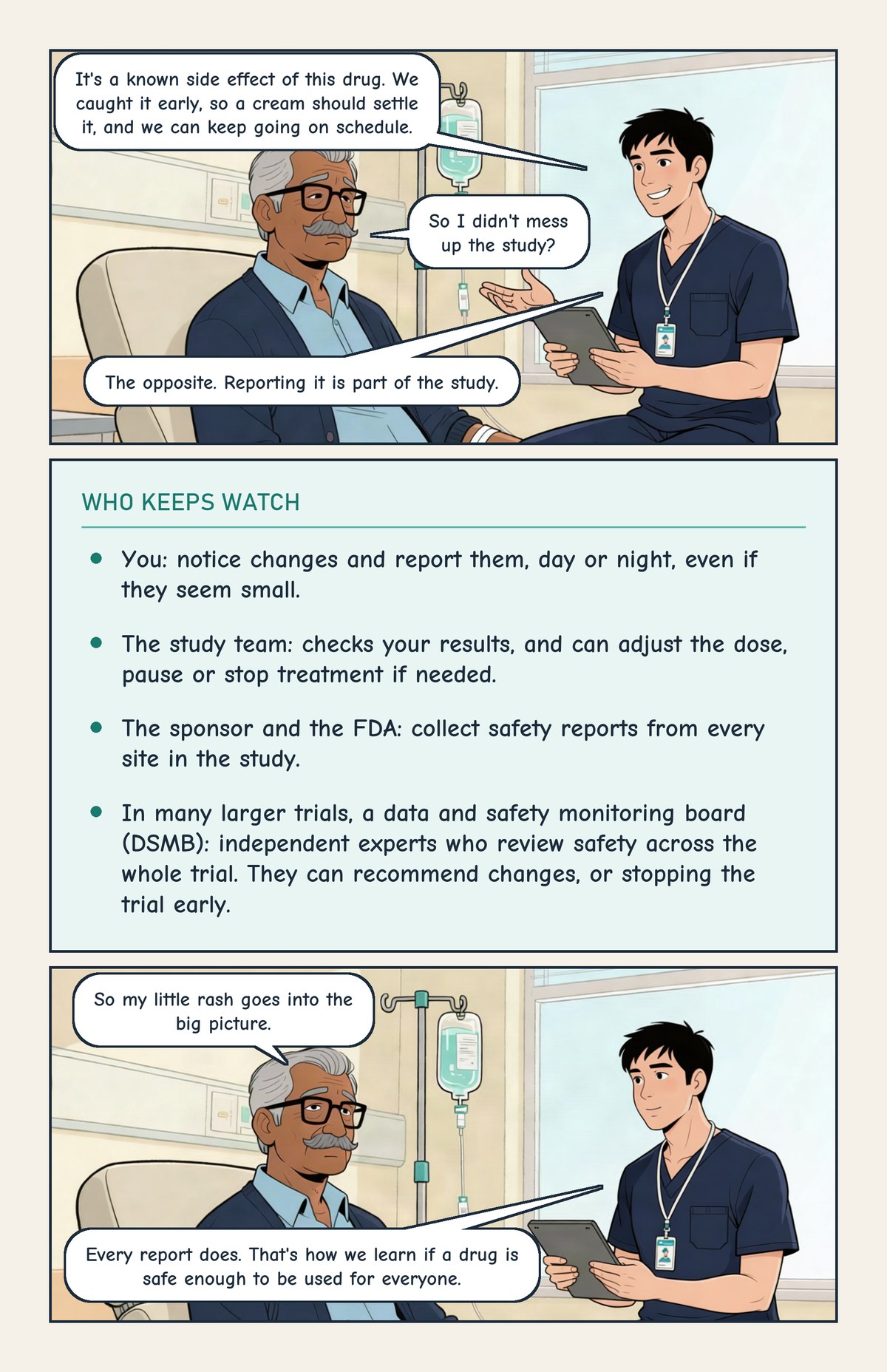
Sam: It's a known side effect of this drug. We caught it early, so a cream should settle it, and we can keep going on schedule.
Raj: So I didn't mess up the study?
Sam: The opposite. Reporting it is part of the study.
Who keeps watch
- You: notice changes and report them, day or night, even if they seem small.
- The study team: checks your results, and can adjust the dose, pause or stop treatment if needed.
- The sponsor and the FDA: collect safety reports from every site in the study.
- In many larger trials, a data and safety monitoring board (DSMB): independent experts who review safety across the whole trial. They can recommend changes, or stopping the trial early.
Raj: So my little rash goes into the big picture.
Sam: Every report does. That's how we learn if a drug is safe enough to be used for everyone.
Read page 5 as text
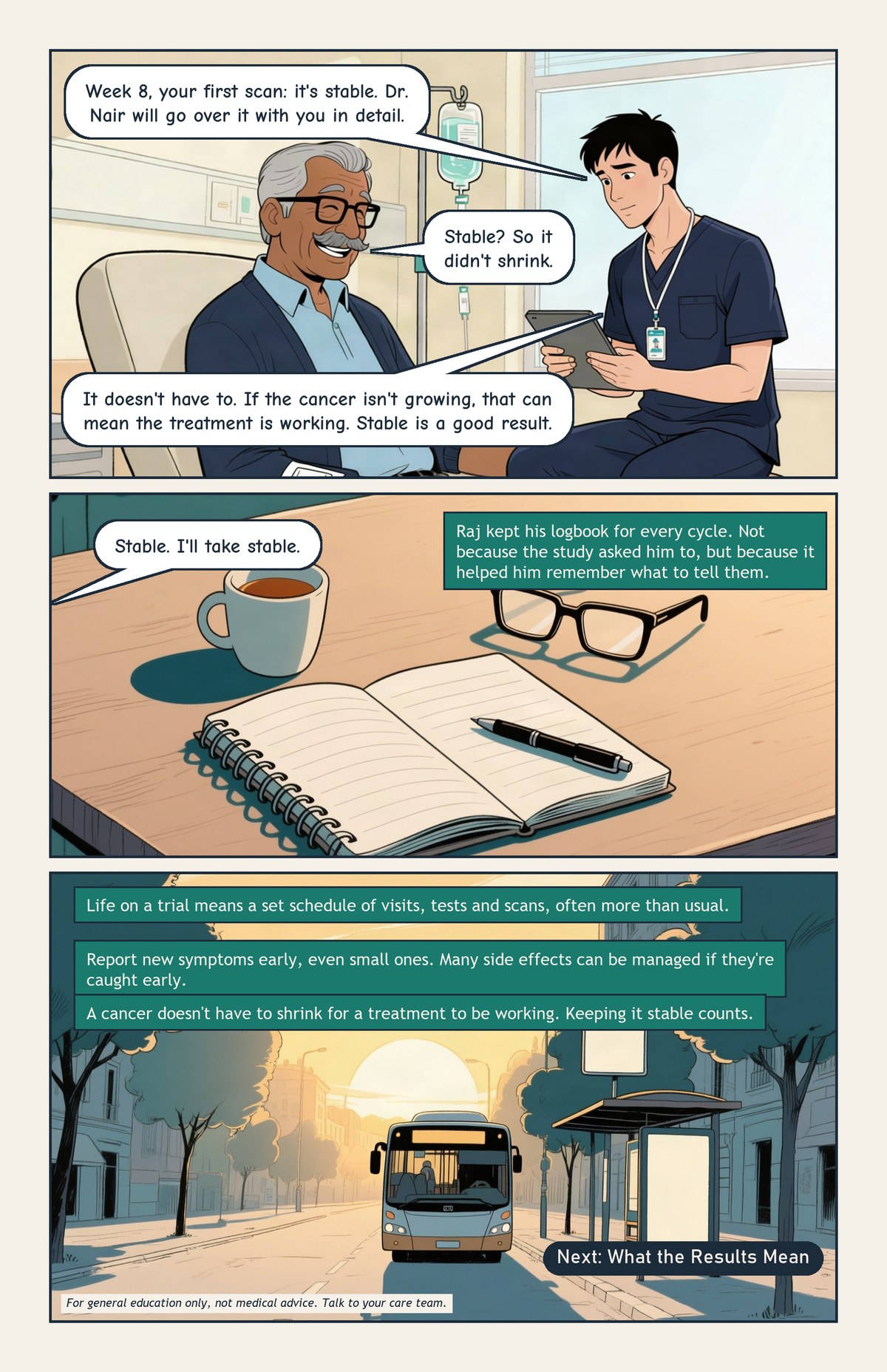
Sam: Week 8, your first scan: it's stable. Dr. Nair will go over it with you in detail.
Raj: Stable? So it didn't shrink.
Sam: It doesn't have to. If the cancer isn't growing, that can mean the treatment is working. Stable is a good result.
Raj kept his logbook for every cycle. Not because the study asked him to, but because it helped him remember what to tell them.
Raj: Stable. I'll take stable.
Life on a trial means a set schedule of visits, tests and scans, often more than usual.
Report new symptoms early, even small ones. Many side effects can be managed if they're caught early.
A cancer doesn't have to shrink for a treatment to be working. Keeping it stable counts.
For general education only, not medical advice. Talk to your care team.
The people in these guides are fictional, and any trial numbers are examples. For general education only. Talk to your care team about your own situation.