
Read page 1 as text
Luis coached kids for a living. Paperwork was not his thing.
Luis: Thirty pages? This is longer than our car loan.
Marisol: Then we read it together. Slowly.
The next day, at the clinic.
Sam: This is the informed consent form. It's not a contract. It's there to help you decide, and I'll go through every part with you.

Read page 2 as text
What the consent form tells you
- Why the study is being done
- What will happen: visits, tests and treatments
- Possible risks and side effects
- Possible benefits, and that there may be none
- Other options, including not joining
- Costs, and what happens if you're harmed by the study
- How your information is protected
- Who to call with questions
Marisol: Is there a version in Spanish? I understand medical things better in Spanish.
Sam: Yes. You have the right to information in a language you understand, and we can bring in a medical interpreter at no cost.

Read page 3 as text
Luis: Say I start, and it's not working for me. Can I quit?
Sam: Anytime, for any reason. Just tell the study team so we can help you stop safely.
Your rights in a trial
- Joining is voluntary.
- You can ask questions at any time, before and after you sign.
- You can leave at any time, and your regular care continues.
- You'll be told about new information that might change your mind.
- You get a signed copy of the consent form to keep.
Luis: I coach at a high school. I don't want the whole town knowing my business.
Sam: Your medical records are protected by privacy law. Study data are usually labeled with a code instead of your name.

Read page 4 as text
Luis: What's this going to cost us? We've got two kids.
Sam: Good question to ask before you sign. The study drug and study-only tests are often paid for by the trial.
Sam: Routine care is usually billed to insurance. Most U.S. health plans have to cover routine care in approved trials, but we'll check your plan before you decide.
Marisol: And this section, if he's hurt because of the study?
Sam: Let's read that part together, line by line. It's one of the most important sections.
Read page 5 as text
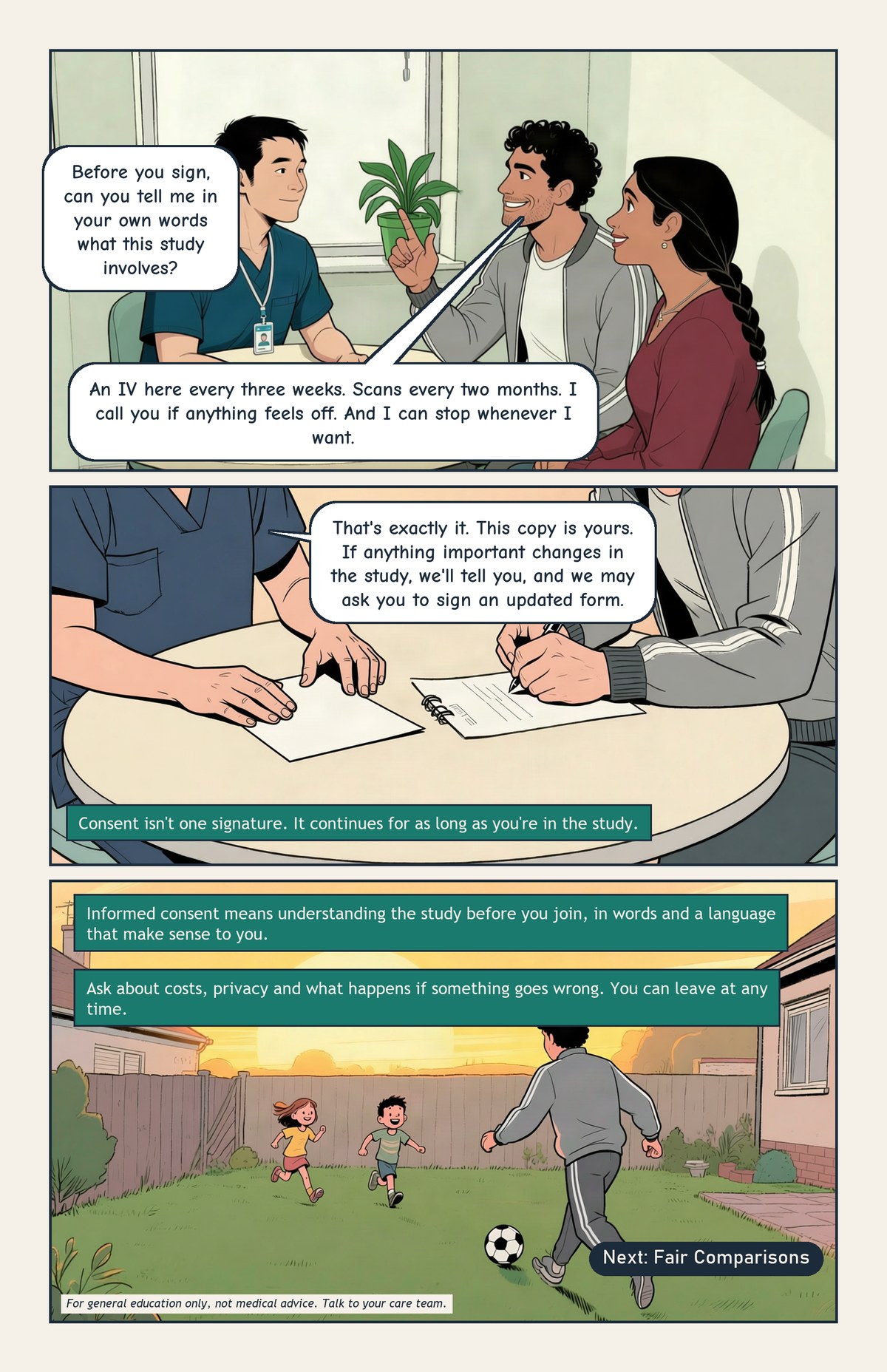
Sam: Before you sign, can you tell me in your own words what this study involves?
Luis: An IV here every three weeks. Scans every two months. I call you if anything feels off. And I can stop whenever I want.
Sam: That's exactly it. This copy is yours. If anything important changes in the study, we'll tell you, and we may ask you to sign an updated form.
Consent isn't one signature. It continues for as long as you're in the study.
Informed consent means understanding the study before you join, in words and a language that make sense to you.
Ask about costs, privacy and what happens if something goes wrong. You can leave at any time.
For general education only, not medical advice. Talk to your care team.
The people in these guides are fictional, and any trial numbers are examples. For general education only. Talk to your care team about your own situation.