Read page 1 as text
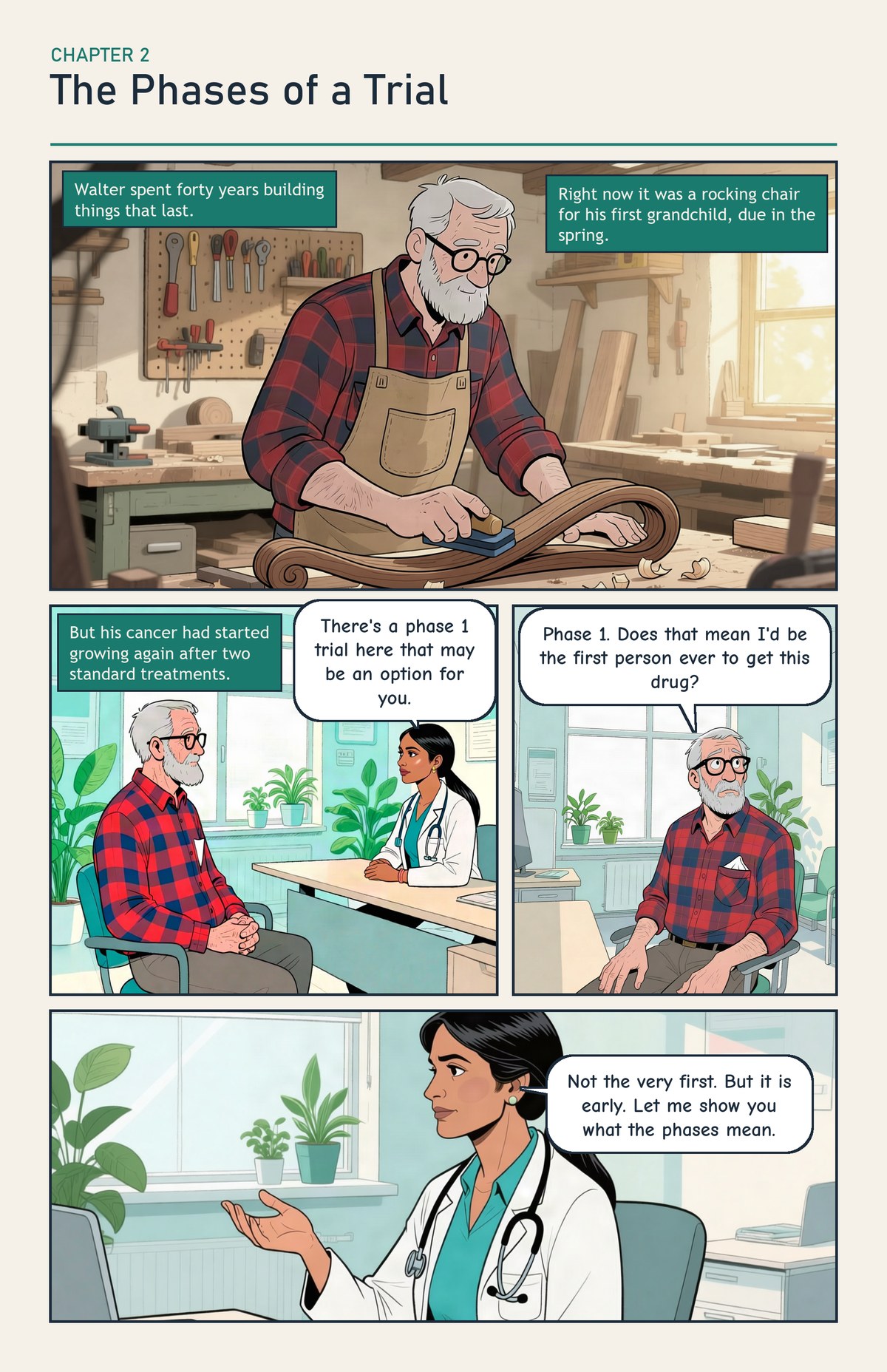
Walter spent forty years building things that last.
Right now it was a rocking chair for his first grandchild, due in the spring.
But his cancer had started growing again after two standard treatments.
Dr. Nair: There's a phase 1 trial here that may be an option for you.
Walter: Phase 1. Does that mean I'd be the first person ever to get this drug?
Dr. Nair: Not the very first. But it is early. Let me show you what the phases mean.
Read page 2 as text
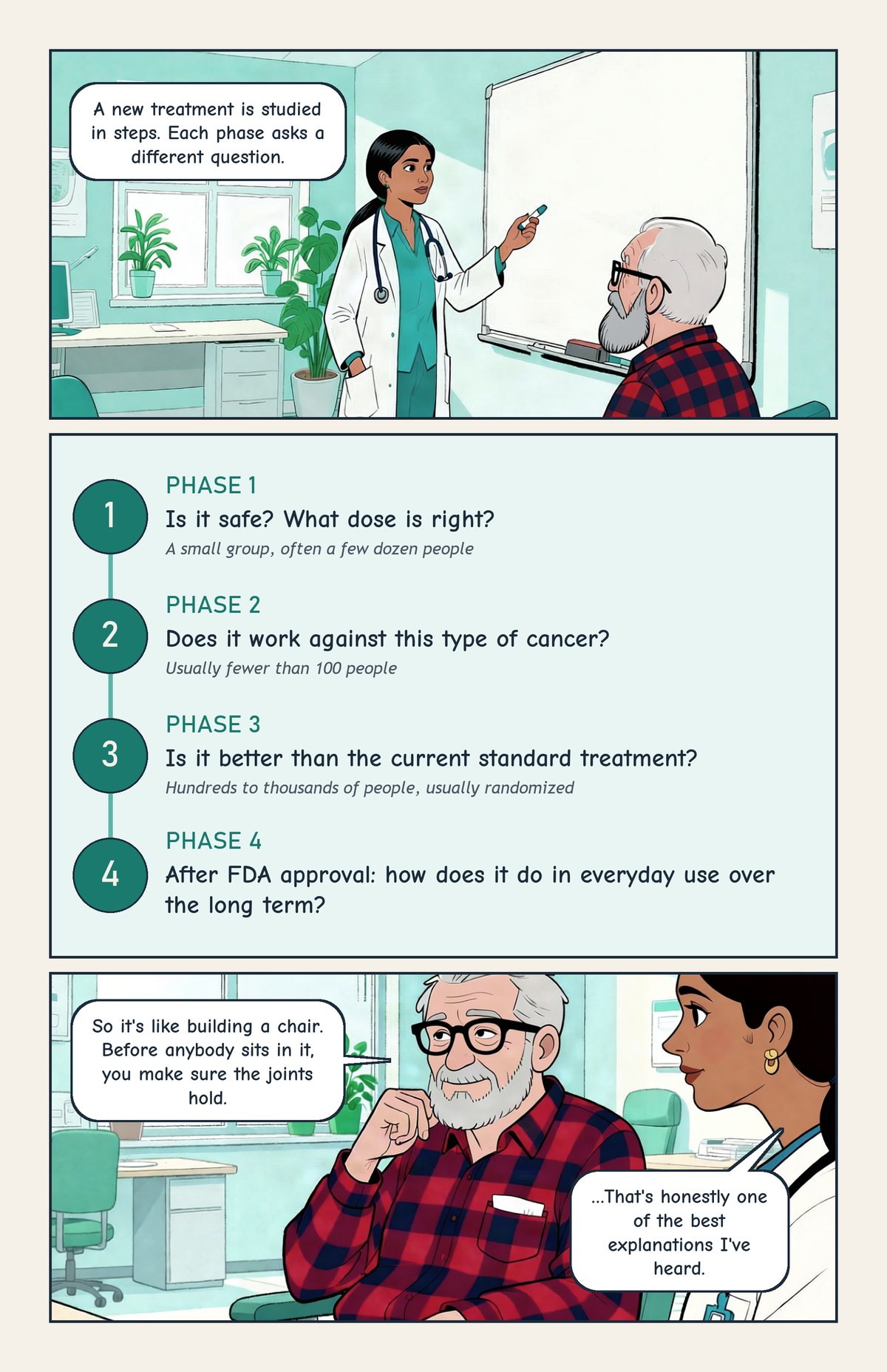
Dr. Nair: A new treatment is studied in steps. Each phase asks a different question.
- Phase 1: Is it safe? What dose is right? (A small group, often a few dozen people)
- Phase 2: Does it work against this type of cancer? (Usually fewer than 100 people)
- Phase 3: Is it better than the current standard treatment? (Hundreds to thousands of people, usually randomized)
- Phase 4: After FDA approval: how does it do in everyday use over the long term?
Walter: So it's like building a chair. Before anybody sits in it, you make sure the joints hold.
Dr. Nair: …That's honestly one of the best explanations I've heard.
Read page 3 as text
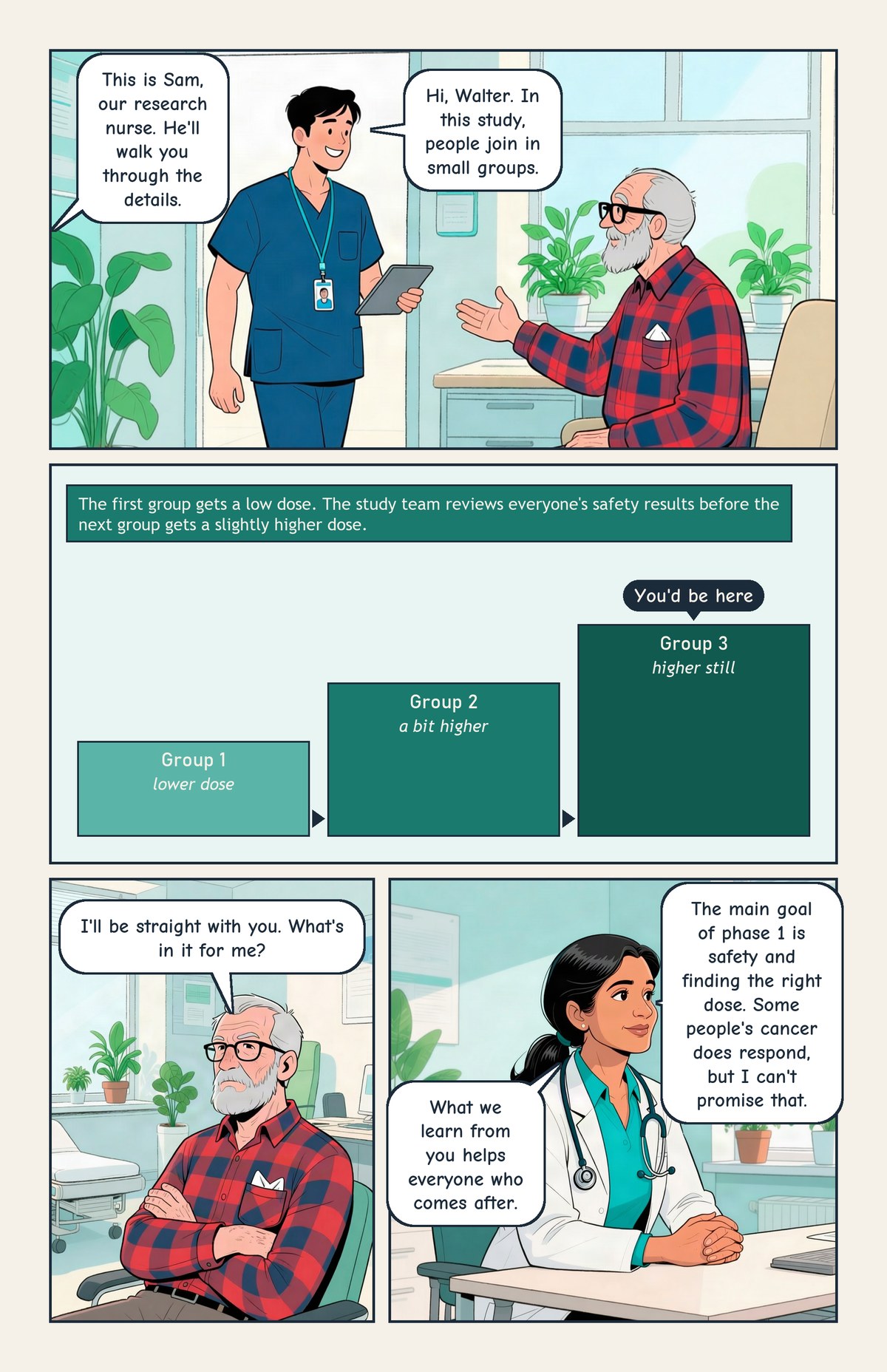
Dr. Nair: This is Sam, our research nurse. He'll walk you through the details.
Sam: Hi, Walter. In this study, people join in small groups.
Diagram: Group 1 (lower dose), Group 2 (a bit higher), Group 3 (higher still). Marked: "You'd be here".
The first group gets a low dose. The study team reviews everyone's safety results before the next group gets a slightly higher dose.
Walter: I'll be straight with you. What's in it for me?
Dr. Nair: The main goal of phase 1 is safety and finding the right dose. Some people's cancer does respond, but I can't promise that.
Dr. Nair: What we learn from you helps everyone who comes after.
Read page 4 as text
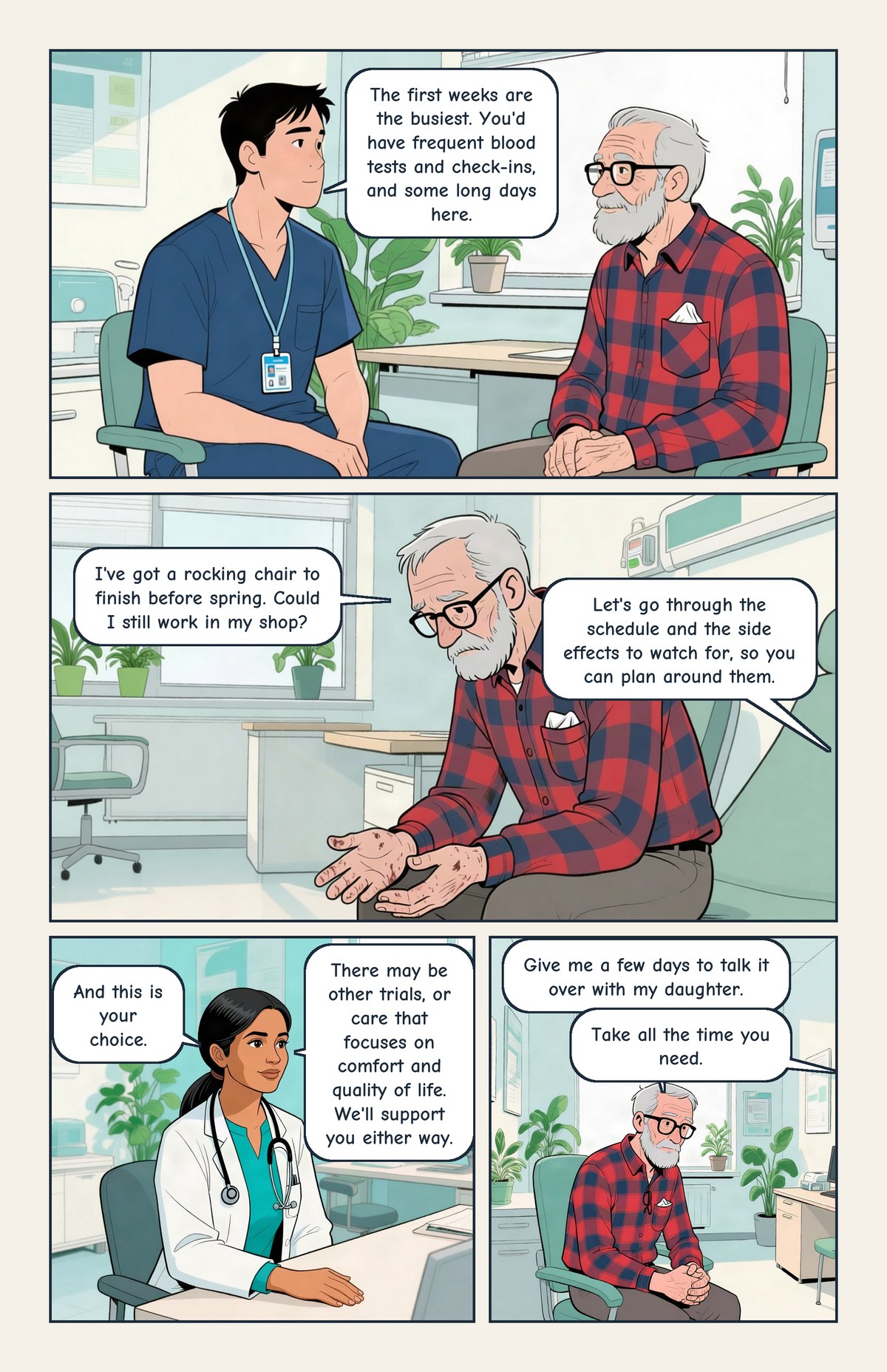
Sam: The first weeks are the busiest. You'd have frequent blood tests and check-ins, and some long days here.
Walter: I've got a rocking chair to finish before spring. Could I still work in my shop?
Sam: Let's go through the schedule and the side effects to watch for, so you can plan around them.
Dr. Nair: And this is your choice.
Dr. Nair: There may be other trials, or care that focuses on comfort and quality of life. We'll support you either way.
Walter: Give me a few days to talk it over with my daughter.
Dr. Nair: Take all the time you need.
Read page 5 as text
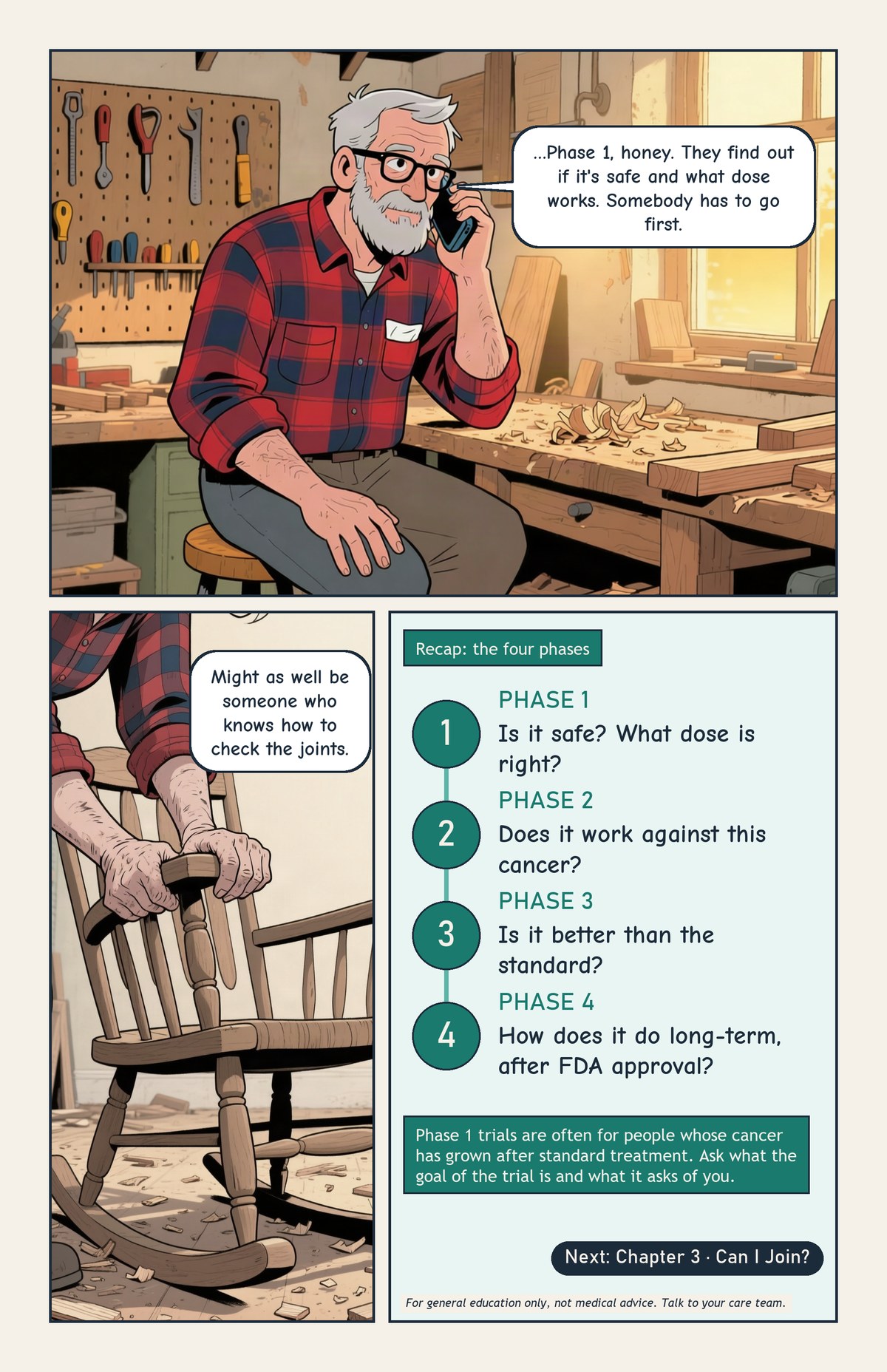
Walter: …Phase 1, honey. They find out if it's safe and what dose works. Somebody has to go first.
Walter: Might as well be someone who knows how to check the joints.
Recap: the four phases
- Phase 1: Is it safe? What dose is right?
- Phase 2: Does it work against this cancer?
- Phase 3: Is it better than the standard?
- Phase 4: How does it do long-term, after FDA approval?
Phase 1 trials are often for people whose cancer has grown after standard treatment. Ask what the goal of the trial is and what it asks of you.
For general education only, not medical advice. Talk to your care team.
The people in these guides are fictional, and any trial numbers are examples. For general education only. Talk to your care team about your own situation.